


제품상세보기
Nautical Publications
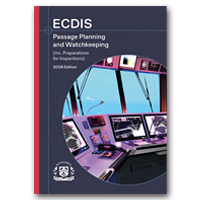
ECDIS PASSAGE PLANNING AND WATCHKEEPING
(INC. PREPARATIONS FOR INSPECTIONS)
Utilising the APEM (appraisal, planning, execution and monitoring) methodology, this 2026 edition sets out procedures for the correct configuration of ECDIS and highlights the best practices for passage planning and watchkeeping.
This publication equips navigators with a thorough knowledge of ECDIS, contributing towards safer navigation and a more effective bridge team. It encourages operators to practise using every function and technique available on ECDIS, such as new automatic functions for creating 'no-go' alarms, 3D ENC functionality and ECDIS safety settings. A revised introduction chapter details the latest IMO Performance Standards for ECDIS equipment.
The 2026 edition contains a new dedicated chapter on Port State Control, Audits and Inspections, alongside expanded S-100 ECDIS content and additional case studies examining incidents where incorrect ECDIS safety settings were a contributing factor. The verification checks are split according to ECDIS and Passage Planning verification, with the latter following the APEM structure. Each area of inspection is covered, with guidance included on how to conduct the checks.
Updated ECDIS screenshots, expanded NAVTEX content and illustrations (such as the PSC flowchart) aid the reader's understanding of best practice techniques.
This edition of 'ECDIS Passage Planning and Watchkeeping' sets out procedures for the correct configuration of ECDIS and, utilising the appraisal, planning, execution, monitoring (APEM) methodology, highlights best practices for passage planning and watchkeeping.
An ECDIS operator should:
- Be proficient in setting up the ECDIS, particularly the safety and display settings
- be aware that, while ECDIS may continuously display a ?position?, it is important to understand how that position has been derived and how to verify its accuracy. The key to effective ECDIS navigation is ?position verification? of the current global navigation satellite system (GNSS) position. The watchkeeper must regularly verify the GNSS position with lines of position (LOPs) derived from an alternative positioning method.
Practising the use of every function and technique available on the ECDIS is one of the most effective ways a watchkeeper can maintain and develop their navigation skills at sea. Learning how to use each type of ECDIS thoroughly, and mentoring others to do the same, contributes towards safer ship operation and a more effective bridge team.
In November 2021, the UK Supreme Court reaffirmed the decision that a defective passage plan effectively renders the ship legally unseaworthy. In the case in question, a large container ship went aground. The company was held liable for several million dollars when it was determined that the chart had not been properly updated. It was found that the passage plan (appraisal and planning stages) and subsequent navigation outside a buoyed fairway did not reflect a warning given in a Notice to Mariners. The warning stated that the depths shown on the chart outside the fairway were unreliable and that the waters were shallower than those recorded on the chart.